In the first half of 2026, Zhao Ming, Chief Financial Officer of University of Shanghai for Science and Technology(USST); Cai Yonglian, Vice President; and Zhang Hua, Vice President, successively led delegations respectively to Malaysia and Australia, Germany and Austria, and South Korea and France to advance the university’s international exchange efforts, achieving a series of results. Relevant officials and faculty members from the School of Foreign Languages, the School of Energy and Power Engineering, the Sino-German College, the School of Mechanical Engineering, the School of Optoelectronic Information and Computer Engineering, the Management School, the School of Materials and Chemistry, and the International Affairs Office accompanied the delegations on these visits.
Deepening Inter-University Cooperation
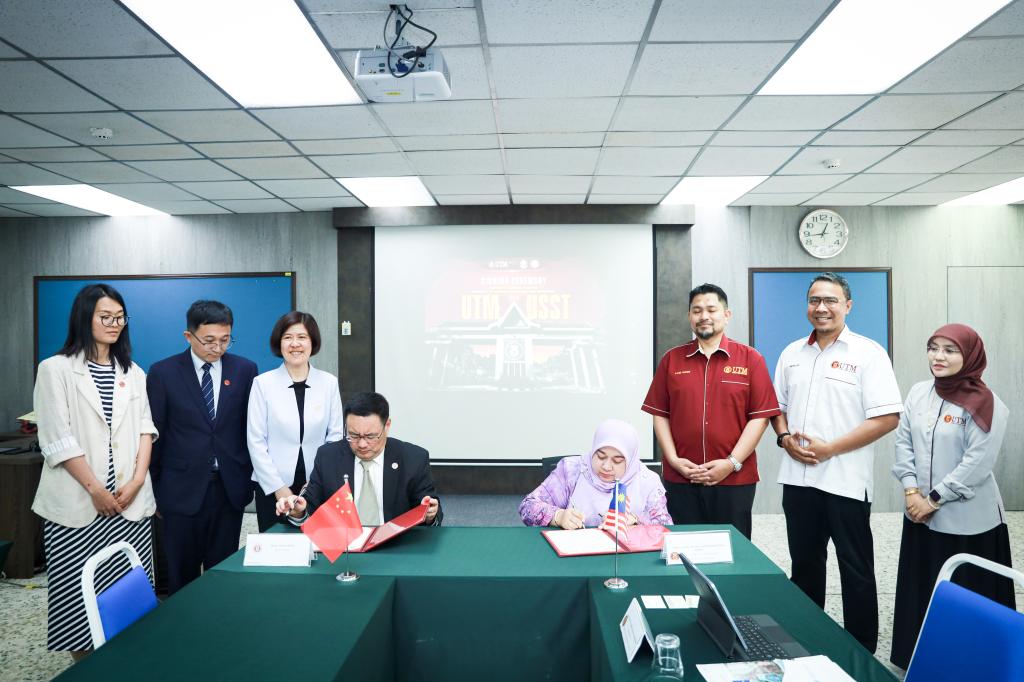
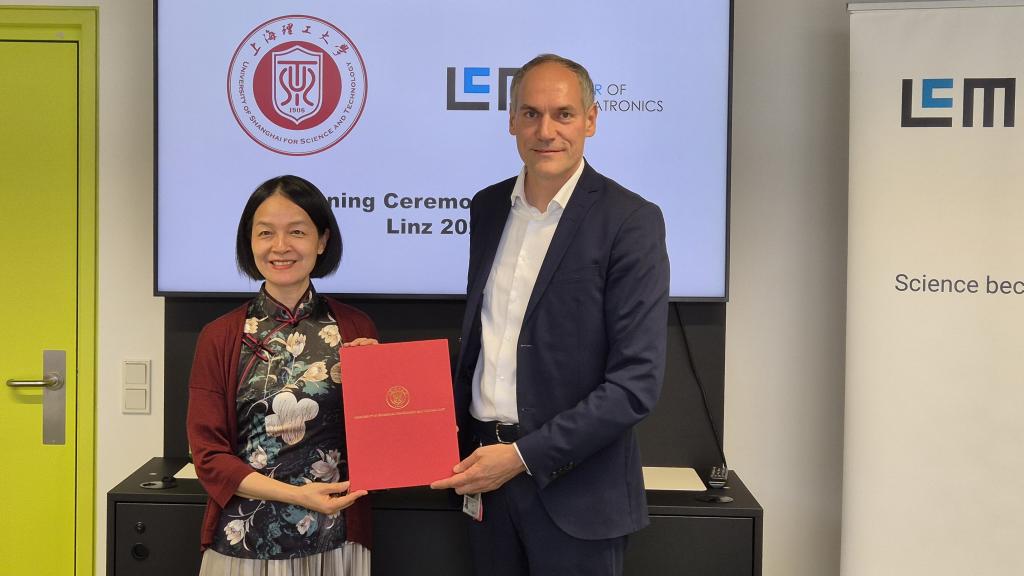
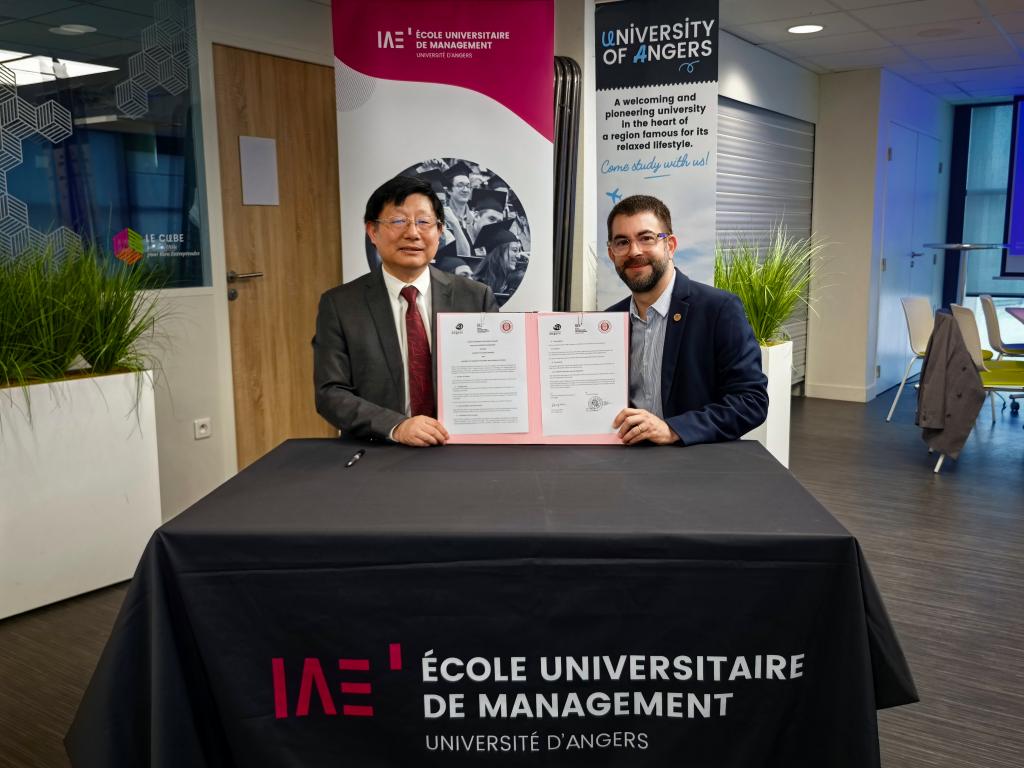
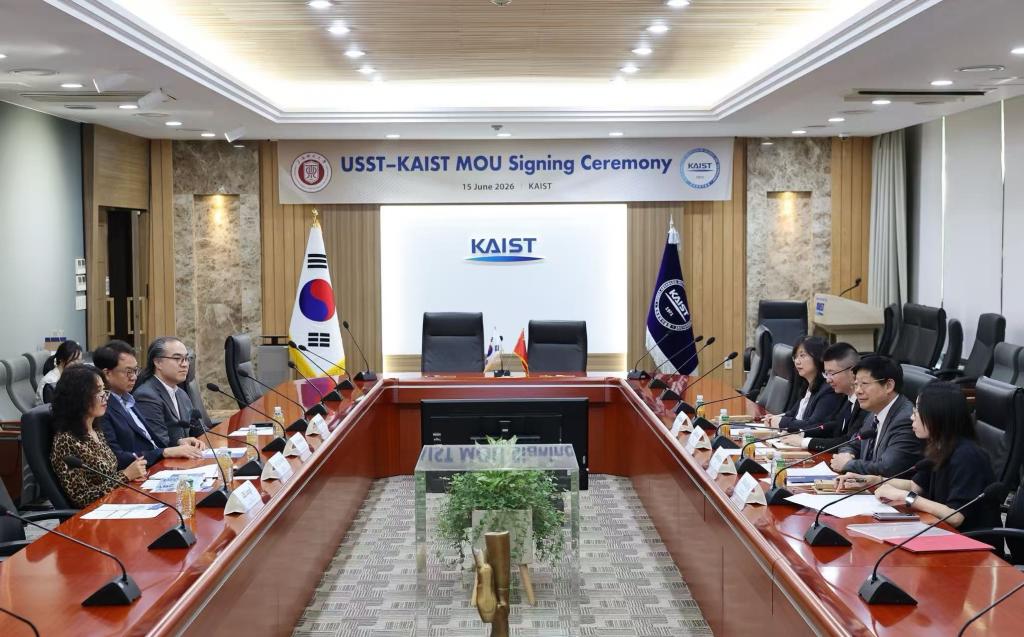
USST continues to advance cooperation with leading international universities and research institutions, signing multiple papers of intent and agreements. Zhao Ming’s delegation signed a paper of intent with Universiti Teknologi Malaysia; Cai Yonglian’s delegation signed memorandums of understanding with the Lower Saxony State Theater in Germany and the Linz Center for Mechatronics; and Zhang Hua’s delegation signed memorandums of understanding for inter-university cooperation and student exchange program agreements with the Korea Advanced Institute of Science and Technology (KAIST), the University of Angers in France, and the University of Bordeaux in France. The signing of these agreements lays a solid foundation for substantive cooperation in areas such as faculty and student exchanges, joint research, and the cultivation of internationally oriented talent.
Expansion and Upgrading of Research Networks
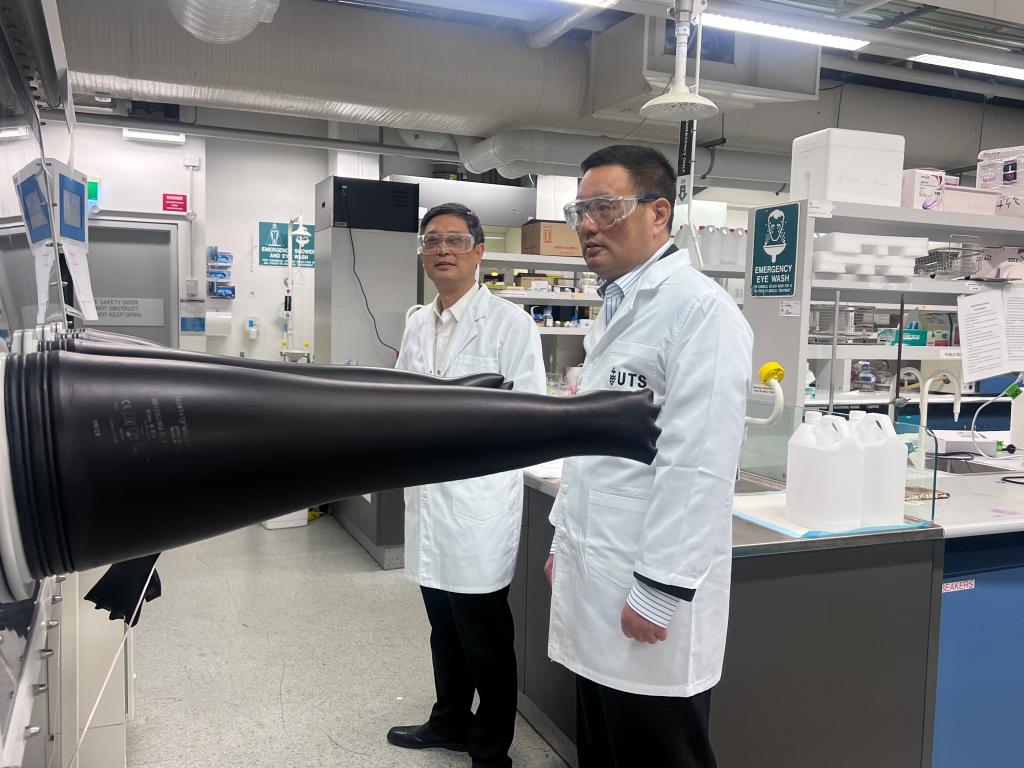
In terms of expanding research cooperation networks, Zhao Ming’s delegation visited the University of Sydney, the University of Technology Sydney, and the Australian Institute for Innovative Materials, engaging in in-depth discussions on topics such as the joint construction of research platforms and the establishment of international joint laboratories; Zhang Hua’s delegation visited the Korea Advanced Institute of Science and Technology (KAIST) and Kyungpook National University in South Korea, reaching multiple agreements on joint research and co-hosting international conferences, thereby laying the foundation for future research collaboration and academic exchange.
Innovation in Joint Talent Cultivation Models
In terms of international talent cultivation, Zhao Ming’s delegation reached consensus with the University of Wollongong on joint cultivation for advanced research degrees, joint supervision of master’s and doctoral students, mutual recognition of undergraduate credits, and the awarding of dual degrees; Cai Yonglian’s delegation held in-depth discussions with Hamburg University of Applied Sciences (Germany), the University of Linz (Austria), and the University of Applied Sciences Upper Austria (Austria) regarding the establishment of new Sino-foreign cooperative dual-degree programs; Zhang Hua’s delegation worked with the Korea Advanced Institute of Science and Technology (KAIST) to refine plans for short-term student exchanges and joint graduate student cultivation, and discussed implementation pathways for master’s-level cooperative education programs; they also identified priority disciplines and majors with the University of Angers in France to promote two-way exchanges and joint talent development.
Advancing the Integration of Industry, Education, Science, and the Arts
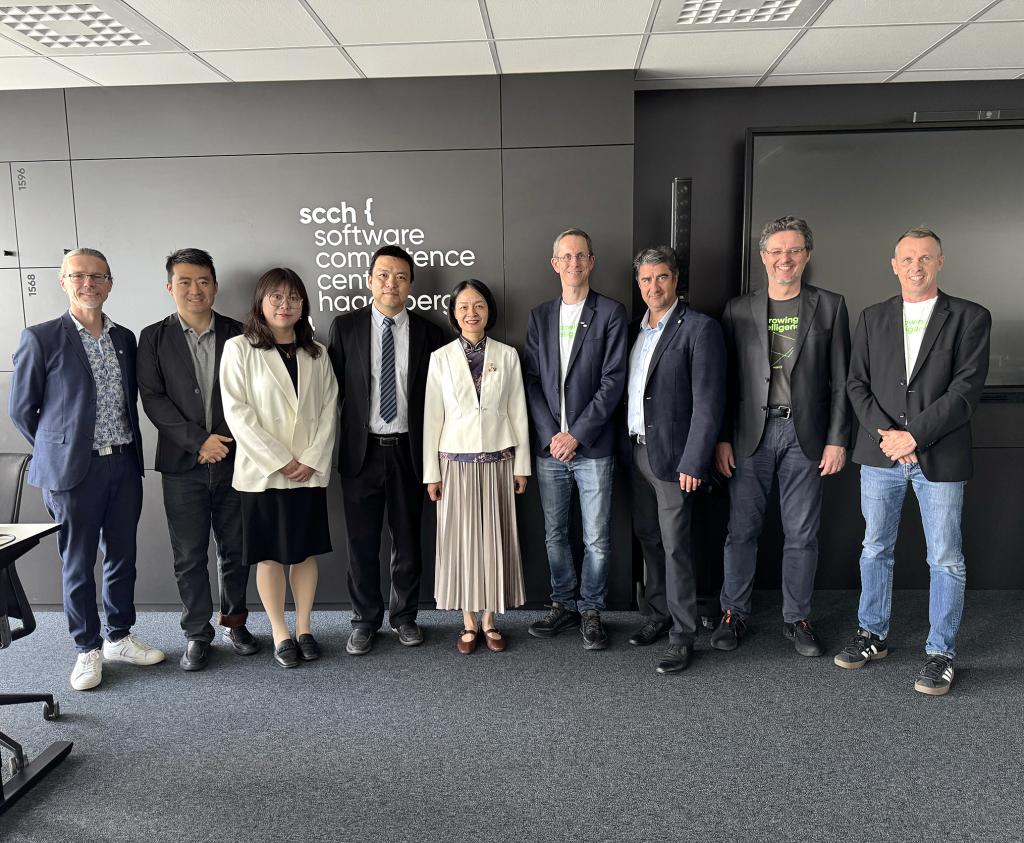
In terms of integrating industry with education and science with the arts, Cai Yonglian’s delegation visited international companies such as the Hagenberg Software Park and Innovation Orbit. They collaborated with German and Austrian industry and research institutions to establish a Sino-German platform for industry-education integration, creating an effective platform for colleges of mechanical engineering, optoelectronics, and energy and power engineering to access advanced European manufacturing technologies, conduct joint industry-university research projects, and provide practical cultivatiion for students; The delegation visited the Hanover University of Music, Drama and Media in Germany and the University of Music and Performing Arts Vienna in Austria to explore interdisciplinary talent development models that leverage artificial intelligence to enhance vocal music education, thereby boosting the university’s international influence in aesthetic education. Cai Yonglian’s delegation visited the University of Bordeaux in France to engage in in-depth discussions on establishing a long-term Sino-French industry-education integration platform, opening new pathways for joint university-enterprise research, overseas practical cultivation, and international employment opportunities for graduates.
Aligning Student Recruitment and Talent Attraction
Zhao Ming’s delegation visited Kuan Yu High School in Johor, Malaysia, and reached a preliminary cooperation agreement with the school regarding the recruitment of international students and the transition from secondary to higher education, providing strong support for the university to expand stable channels for international student enrollment and consolidate the foundation for international recruitment; Cai Yonglian’s delegation paid a courtesy call on the Chinese Embassy in Germany and engaged in constructive exchanges on policies regarding sending talent abroad and attracting international talent; Each delegation held discussions with numerous renowned and emerging scholars overseas, effectively communicating our university’s disciplinary strengths and talent recruitment policies. These efforts significantly enhanced the university’s visibility and appeal among young talent abroad, building bridges for the recruitment of high-level talent.
This series of visits has significantly advanced our university’s collaboration with partners in talent cultivation, scientific research, and the integration of industry and education. The university’s cooperative networks in Europe, Asia, and Oceania have been further consolidated, and its global cooperation framework continues to be optimized. Moving forward, USST will continue to uphold the philosophy of open education, deepen practical cooperation with global partners, and inject new momentum into the university’s high-quality development and the cultivation of internationally oriented talent.


 Home
·
News & Events
·
Content
Home
·
News & Events
·
Content